Zolvo (Backed by Y Combinator)
AI SaaS that automates servicing for commercial lenders.
00

problem
Commercial lenders operate on 1990s software. Teams spend 6+ hrs/day matching wire payments manually, with 16–20 errors/month and 3-day processing cycles. Every new client means more headcount, not better software.
solution
Zolvo sits as the AI layer between bank accounts, loan management systems, and ops teams, handling reconciliation and collections automatically. Your team reviews only the exceptions.
As the founding designer at a YC Spring 26 startup, I owned the full product experience from 0→1.
the goal: make complex back-office operations feel simple, clear, and trustworthy at a glance.
Impact:
-Created a Design System
-Designed 5 core product modules from 0→1 in under 8 weeks
-Landing page launched
-Validated flows through 10+ live walkthroughs
-Designed toward clear KPIs: time-to-first-action, exception review rate, and reconciliation error reduction
Research:
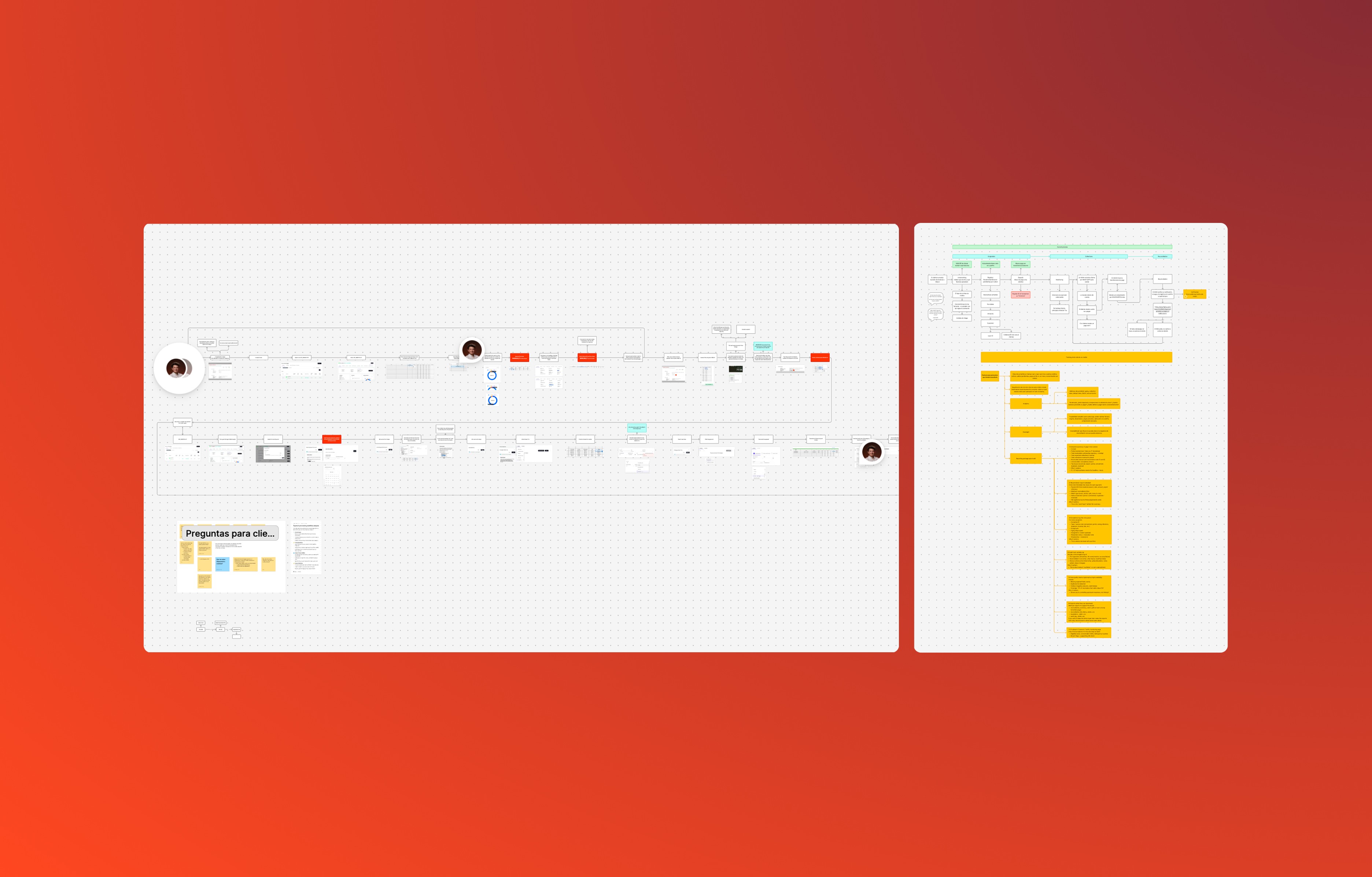
I interviewed ops leads and commercial lenders to map their real workflows. The core insight: the biggest pain wasn't any single task. It was the cognitive load of tracking everything at once with no single source of truth.
Design System:
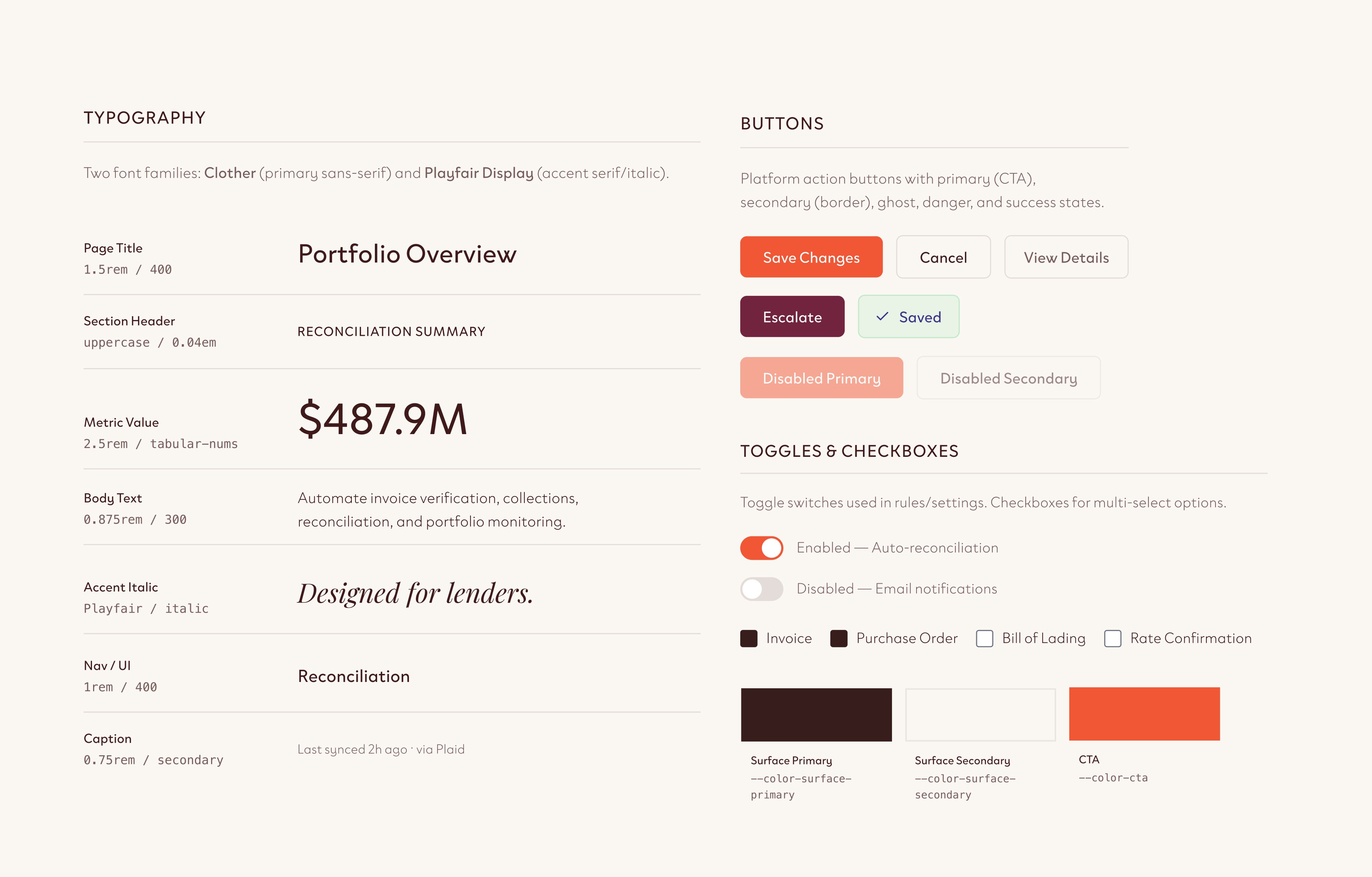
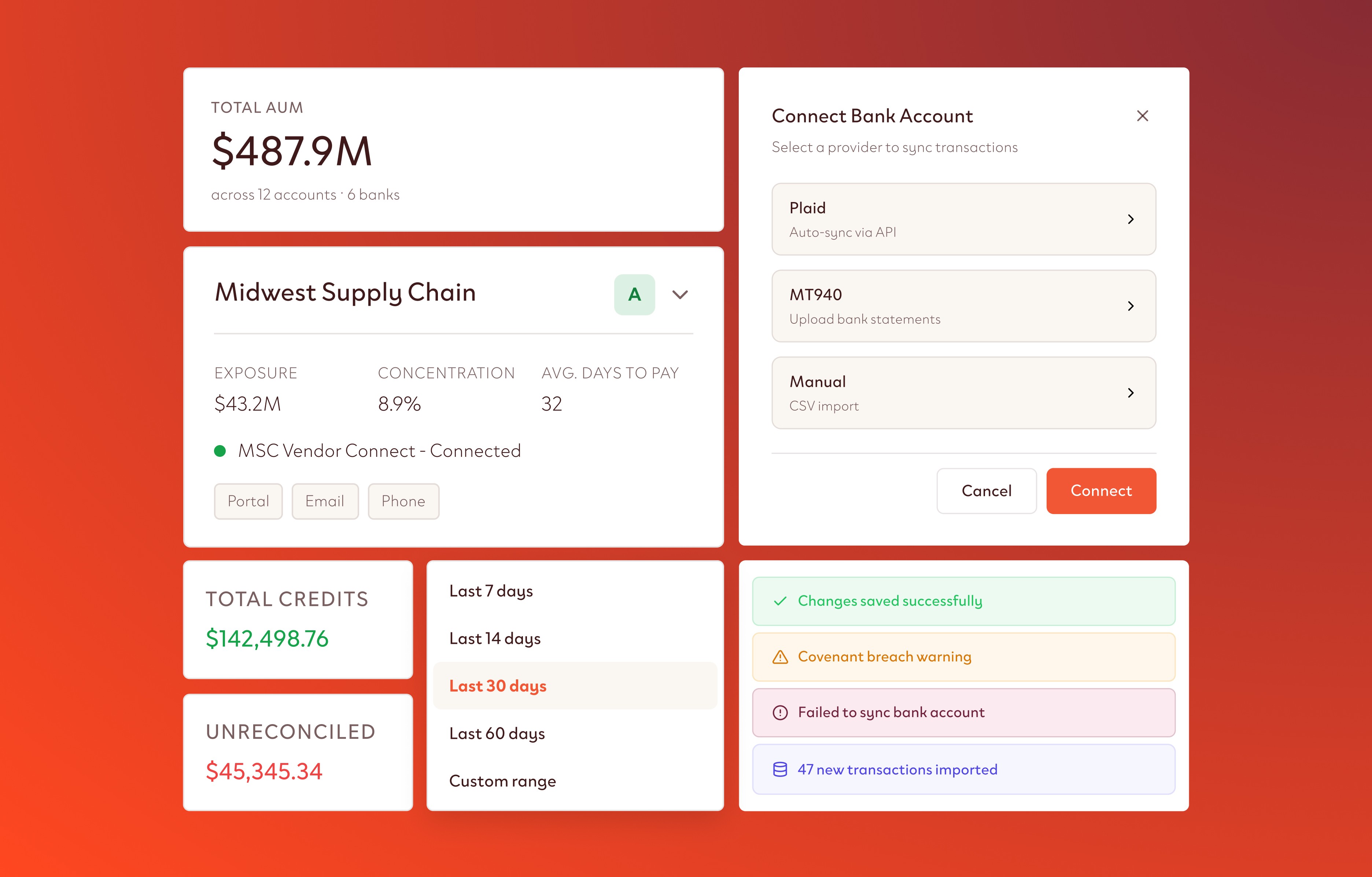
Before designing any screens, I established a visual foundation that felt like an upgrade to what these teams already knew, not a replacement. Dark and Light base, high-contrast, clean utilitarian typography, and dense consistent components, all chosen to feel modern and precise while staying familiar to ops teams used to legacy software.
Design and fast iteration:
I translated the highest-friction ops workflows into four core product pillars: Invoice Verification, Real-time Reconciliation, Loan Collections, and Portfolio Monitoring. Every decision was anchored to one question: does this reduce what an ops person has to hold in their head?
The platform has more modules than shown here. The screens below are publicly available through Zolvo's YC launch.
Invoice Verification:
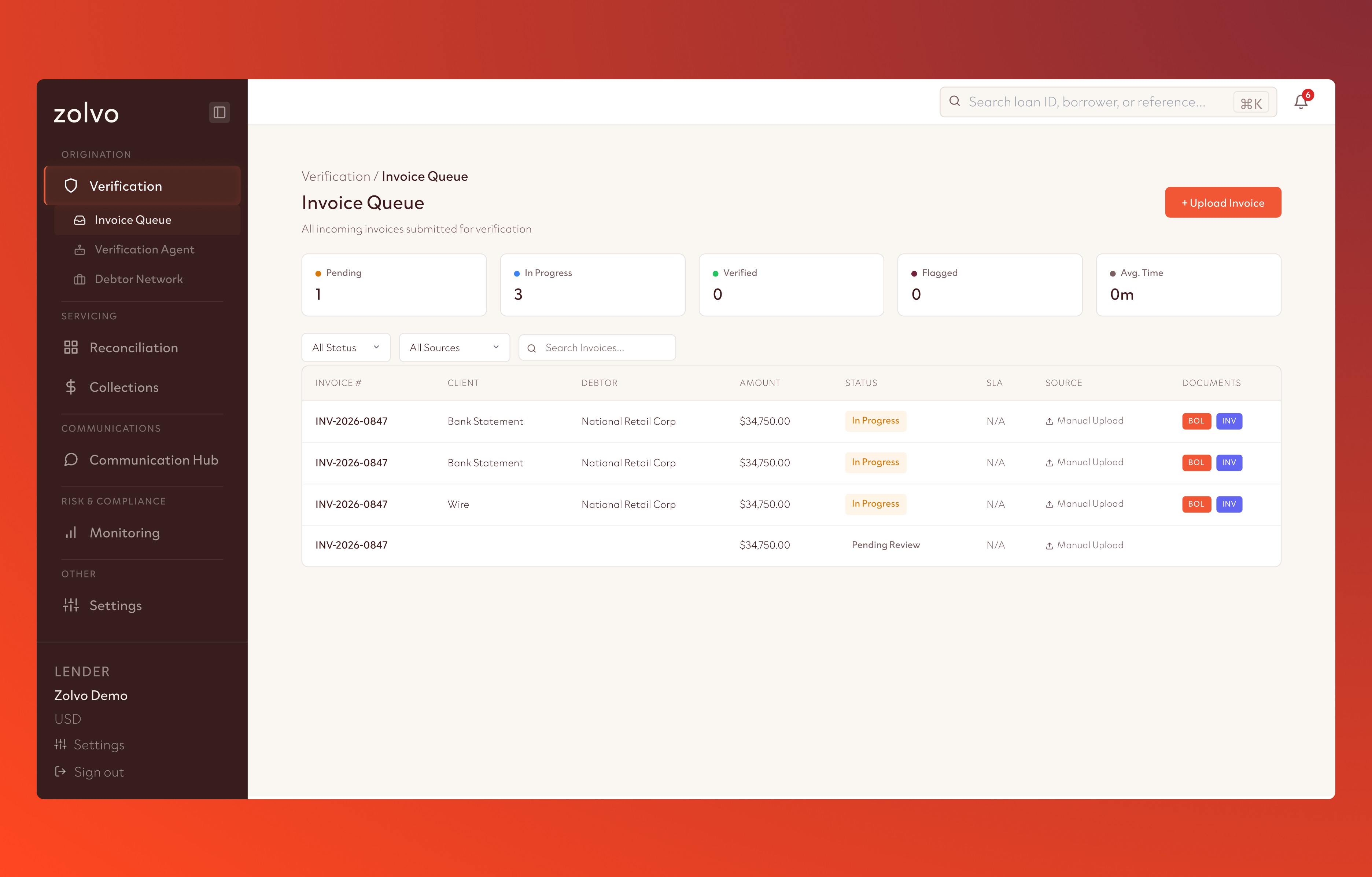
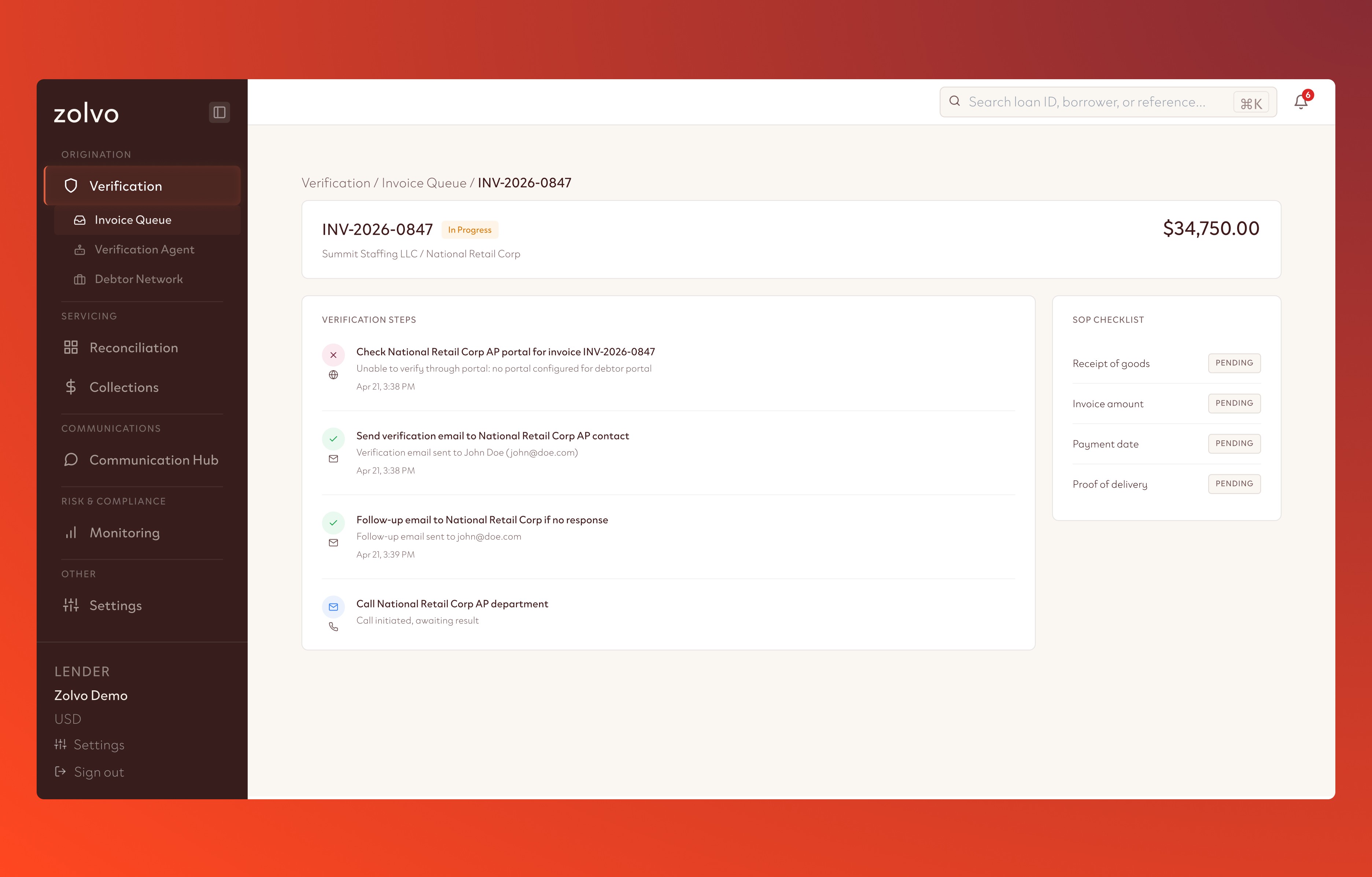
Making AI-driven matching feel trustworthy, not opaque. The Invoice Queue gives ops teams a live view of every incoming invoice and its status. The Invoice Detail shows the full AI verification timeline alongside a human SOP checklist, so reviewers only touch what actually needs them.
Real-time Reconciliation:
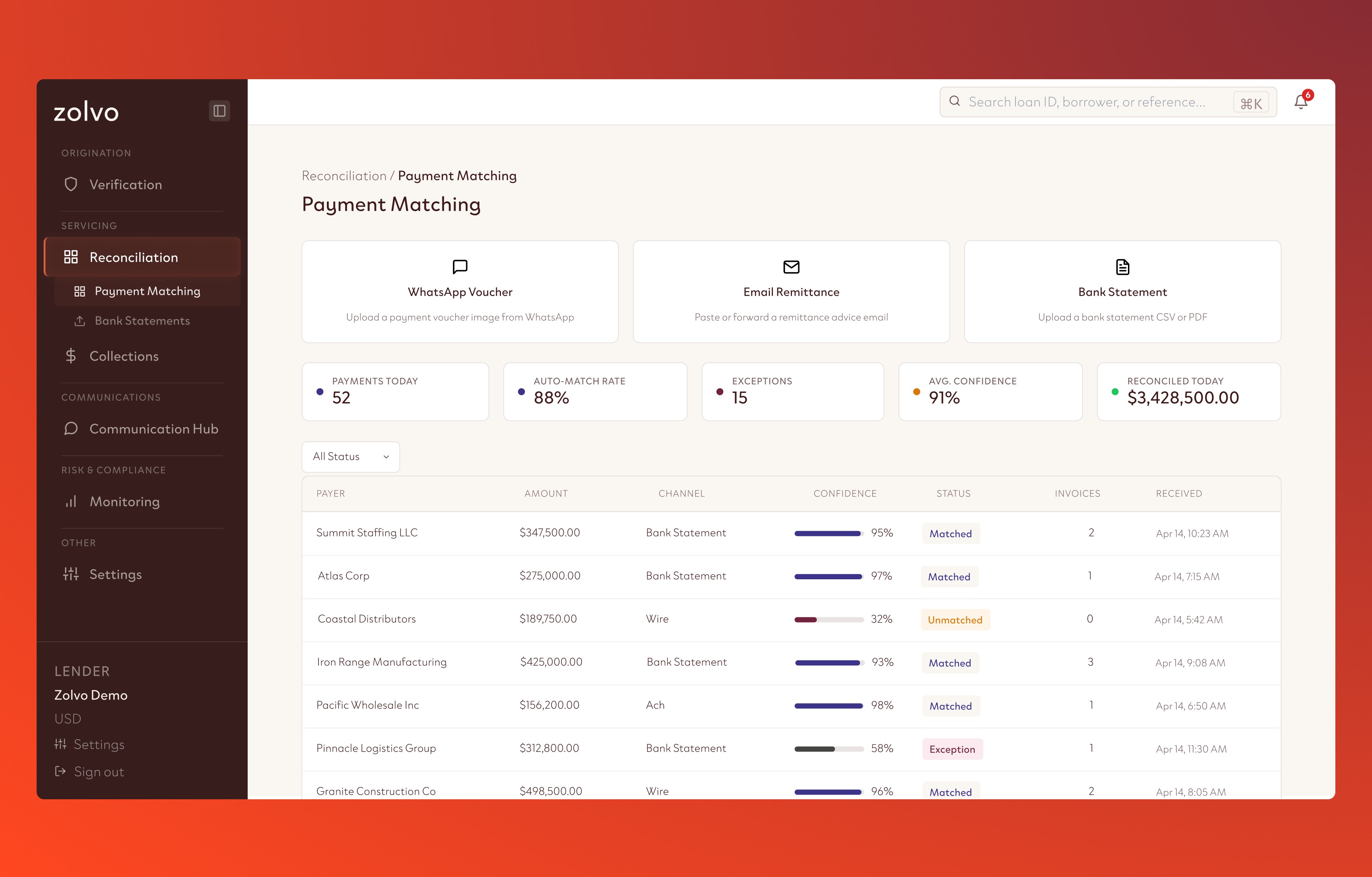
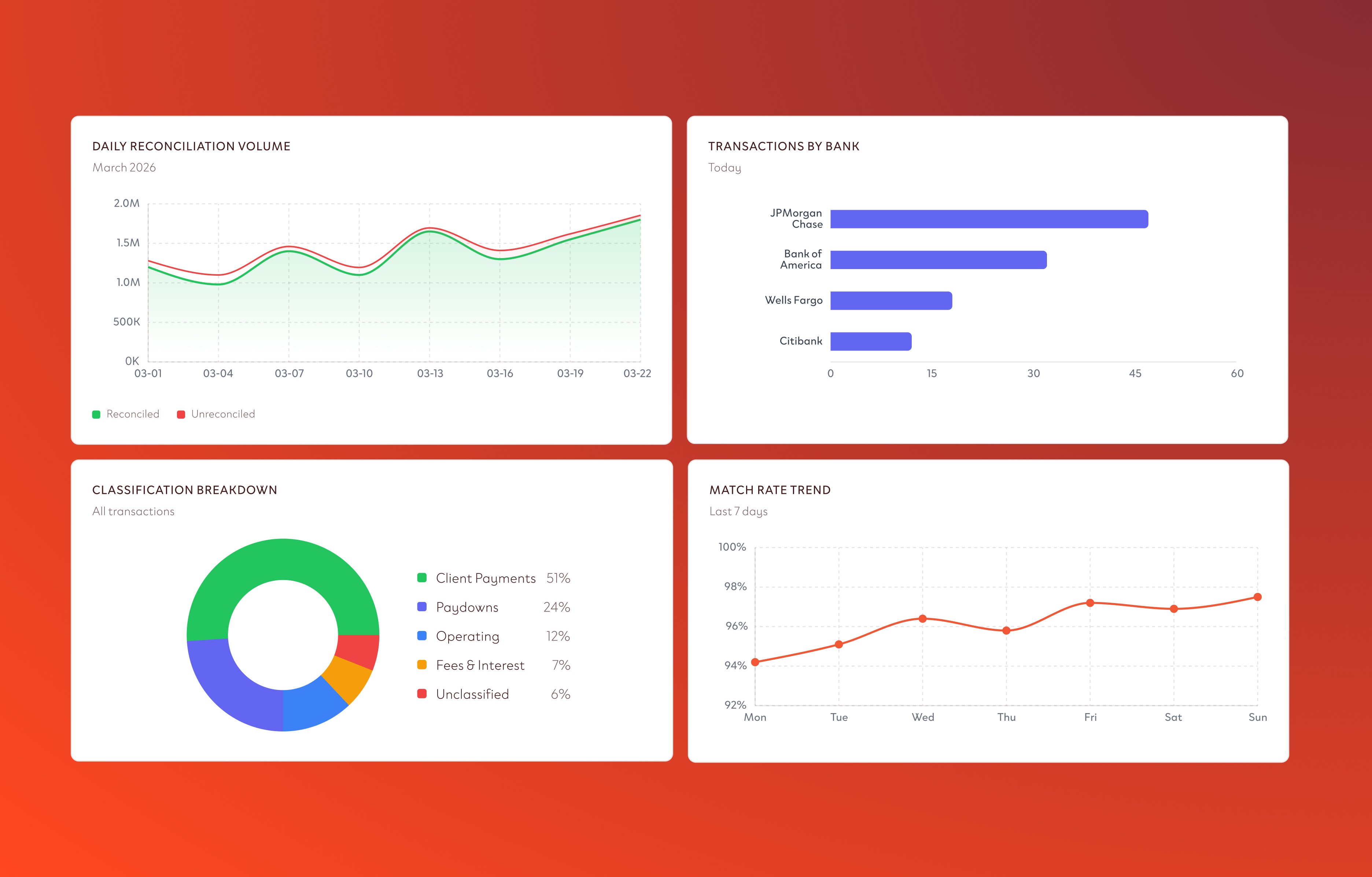
The Payment Matching screen surfaces the four numbers that matter most: payments today, auto-match rate, exceptions, and total reconciled. The Payment Detail shows source evidence, matched invoices with confidence tags, and a full waterfall breakdown, making every AI decision auditable.

Loan Collections & Portfolio Monitoring:
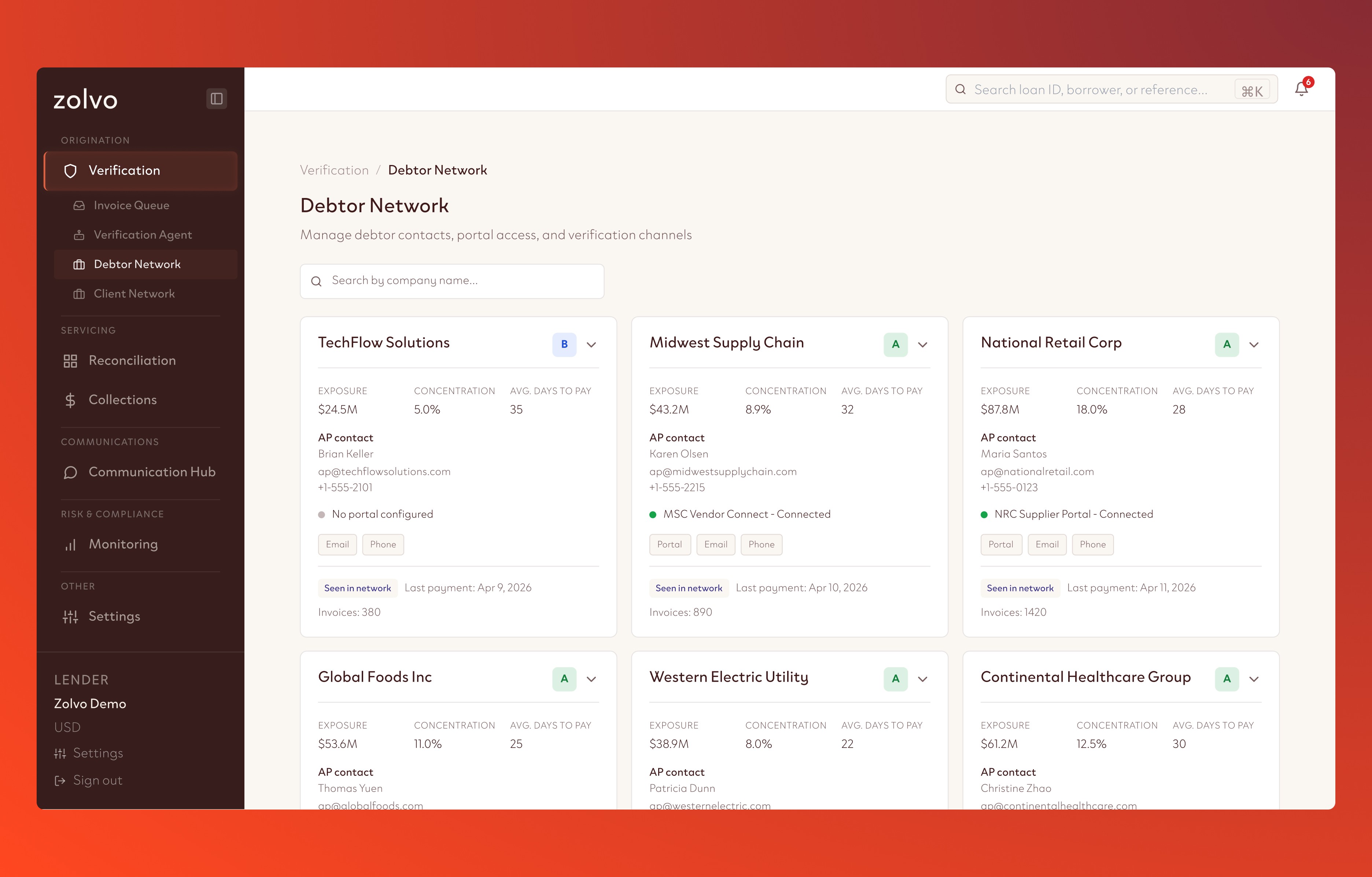
The Debtor Network gives lenders a centralized view of every debtor, including exposure, concentration risk, and verification channels. A relationship health check in seconds, no digging through systems required. Portfolio Monitoring screens remain private.
Settings / Connected Sources:
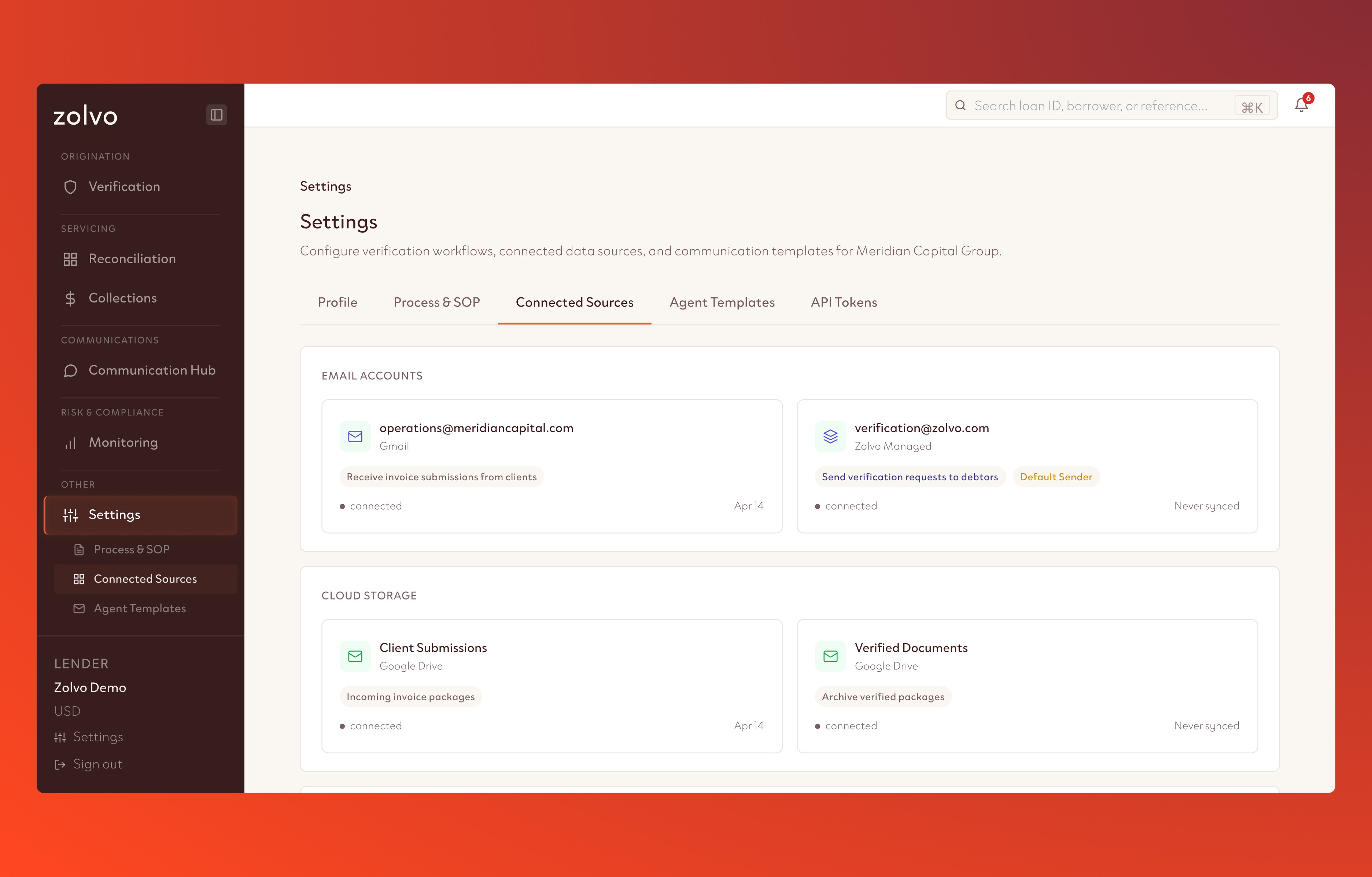
Lenders connect email accounts, cloud storage, and data sources here. Designed to feel like a modern SaaS integration hub, not a legacy admin panel.
What's next:
Next priorities include a mobile-first exception review experience and a client onboarding flow. Once live, primary success metrics will be reconciliation error rate, time in platform per day, and exception resolution time.
year
Mar. 2026 - May 2023.
interface
Desktop
tools
Figma, Cursor
category
UI/UX
01

02
03